
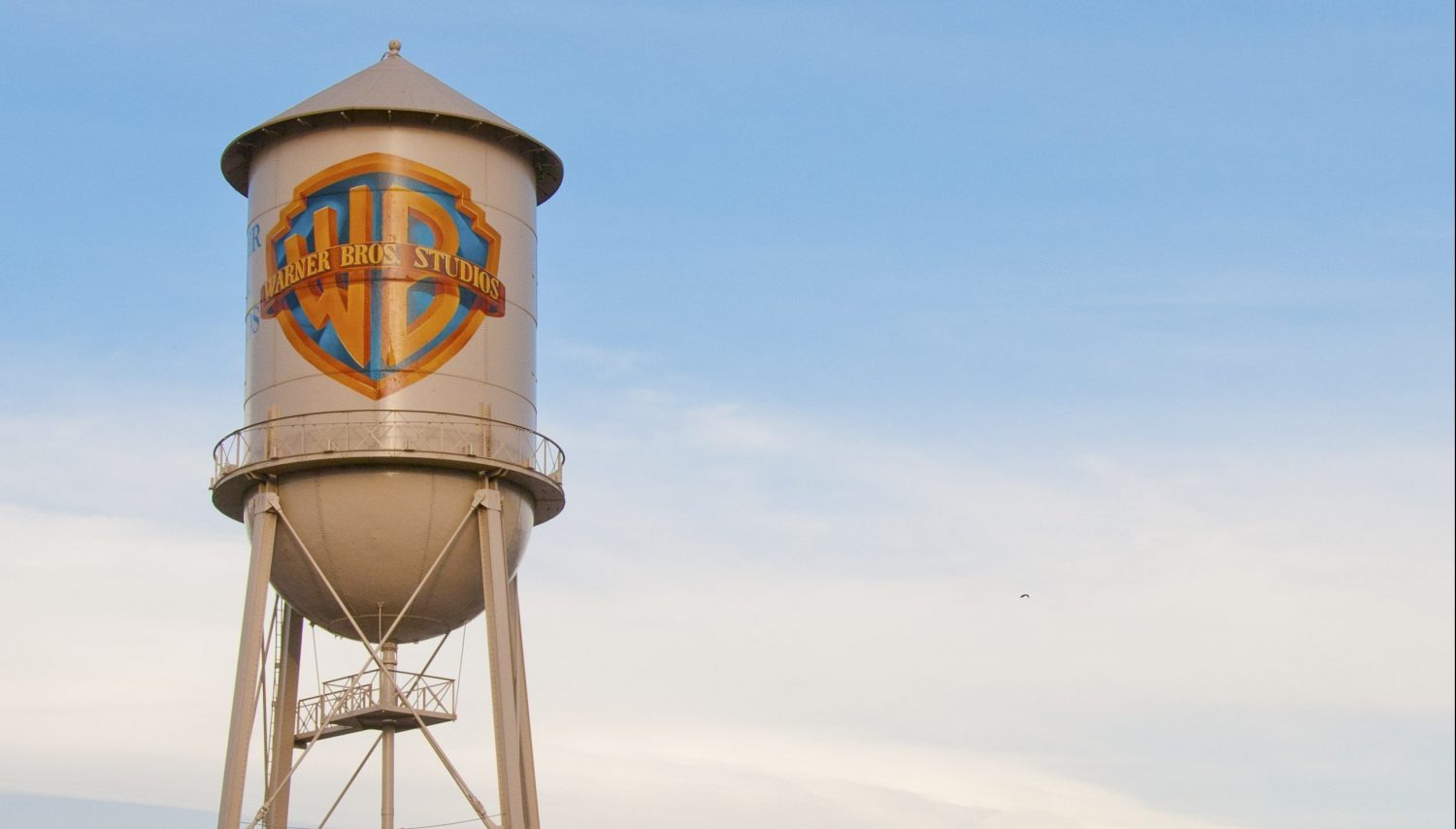

Warner Bros. Studio Water Tower (Source: Warner Bros. Studio)
Warta Kema – On Friday (5/12/25), Netflix announced that they’re entering into an agreement of a merger with media conglomerate, Warner Bros Discovery (WBD). With a total enterprise value of a whopping $82.7 billion, and an equity value of $72 billion. The definitive agreement means that Netflix would now acquire all properties that belong to Warner Bros., including its television and streaming businesses HBO, Max, DC Studios, and an extensive library of moving pictures. This came after a weeks-long bidding war between the streaming service giant and two other media conglomerates, Paramount and Comcast.
The sale of WBD began circulating in early October when the company said that they received unsolicited interest from several parties, one of them later turned out to be Paramount. They then kicked off an auction for the company on October 21, in which Netflix swooped in as a frontrunner. Variety reported that Paramount and Netflix were neck-and-neck in their bids, offering to pay fully in cash and making David Zaslav, the CEO of WBD, co-CEO of the merged company. However, Netflix’s bid trumps all with $28/share for the studio and streaming assets.
With Netflix winning the bid and its subsequent agreement signed, the merger is expected to be finalised in the third quarter of 2026. By then, if things go smoothly for the two industry titans, Netflix-Warner Bros. Discovery will be home to classics such as Casablanca (1942), the Looney Tunes cartoons, and beloved HBO series like The Sopranos, mixed with Netflix’s own libraries. The deal would also bring consolidation to the streaming service by adding Max’s 130 million subscribers to Netflix’s 300 million.
This acquisition has been a long time coming, as WBD has been in a slow decline over the years. A decline that was promised to be fixed by David Zaslav ever since he took the reins as CEO in 2021. He declared that everyone in the company will win, promising great returns for producers, investors, and viewers around the world. However, since then, Hollywood producers have endured cost cuts and an uphill struggle to revitalize returns at the box office. Shareholders were forced to watch their stock suffer steep market declines and struggle to strengthen its balance sheet. Meanwhile, viewers are constantly faced with the news that their most-anticipated films are being cancelled to claim tax write-offs.
With all those in mind, it’s hard to say that anyone wins at all. Though one person somehow managed to do just that. As president and CEO, Zaslav maintained the status as one of the best-paid executives in corporate America. According to the Guardian, his total pay package last year was worth $51.9 million. The year before that, according to Equilar, was $49.7 million, representing a CEO pay ratio to his average employee of 290:1. With this deal, Zaslav passes on WBD’s market problem to Netflix, all while still collecting a huge paycheck, making an already rich person even richer.
In an article by Netflix, Netflix co-CEOs, Ted Sarandos and Greg Peters, stated that Netflix is ready to accept Warner Bros’. incredible library of shows and movies into their own culture-defining library. They believed that this acquisition would improve Netflix’s offering and accelerate its business for decades to come. Using its global reach and proven business model, Netflix would introduce these titles to an even broader audience, strengthening the entire entertainment industry and creating more value for shareholders. Or at least that was what the people getting paid the most in this whole ordeal think.
With a merger as historic and as sweeping as this one, there’s bound to be backlash from the masses. And sure enough, there was. Moviegoers decried this merger as a way for Netflix to monopolize the whole entertainment industry. As one conglomerate gobbled the others, another one will follow, followed by another one, and another one. If this practice isn’t stopped, soon the entire industry will be based solely on a single company lording over all creative output. If that single company turned out to be Netflix, there would be a cultural migration of classic Warner Bros’ properties into a single huge platform. There would also be some issues regarding the centralization of cultural memories, the loss of diversity, and the future of cinema when controlled by an algorithm.
In a platform as huge as Netflix, there exists a risk of narrative homogenization. That is when a medium holds many IPs in its hands, its algorithm would churn and analyze what the viewers will want to watch the most. This total algorithm control could potentially hinder less-than-conventional and even foreign films that aren’t in line with what the average global viewers would watch. Subsequently, the global narratives, or what the average global viewers would watch, would then be fully controlled by a single party; this includes the approval or disapproval of a project. In short, whether or not a movie gets released at all depends on a single corporation, gatekeeping it potentially forever. And thus cultural diversity would be beaten by numbers optimization.
The algorithm-ing of filmmaking and artmaking in general has been an uphill battle for artists around the world for quite some time now. The rise of AI and the aforementioned sorting algorithm has been a darling for corporations and individuals looking for easy money. ‘Ars gratia artis’, making art for art’s sake, seems to mostly no longer be the defining motto of the modern art landscape, as people’s relation with art starts to wane. Society is having a problem appreciating art. The average person doesn’t really understand the value of it nor do they want to, while corporations treat it like an industry-processed product, churning massive amounts of slop to be consumed daily on face value.
As mentioned before, this algorithm’s effect on films will result in less-mainstream movies not getting the spotlight they probably deserve. If this algorithm-based approach to movie producing were implemented, it would mean terrible news to indie and niche filmmakers. A surreal, arthouse film by David Lynch would not see the light of the day as opposed to action movies starring The Rock. Damien Chazelle’s epic, Babylon (2023), would get dragged down the drain while Ryan Reynold’s countless sequels are forcibly jammed in people’s faces. The international film landscape could and would be pushed aside in favor of the next installment of the MCU.
The algorithm will “optimize” the viewing experience by showing viewers what they would most likely see, therefore creating films that are safe, dull, and can be watched to pass the time. Films that seem to be scientifically-engineered to be forgotten as soon as the credit rolls. If and when this happens, we no longer experience, analyze, and appreciate films; instead, we consume them just like any other products. And when something is consumed, it will inevitably be discarded as the consumers move on to the next product.
Putting aside the algorithm problems, the point of movies being regarded not as an art expression but as a product further hampers the filmmakers’ ability to tell a story. Making movies then is no longer a decision to create, to make art for art’s sake; it became a business decision to maximize income. Sometimes that income could even go not to the people responsible for making it but to the executives above them. This situation led to how Zaslav became one of the highest-paid CEOs in the world despite sparking many controversies regarding his conduct in WBD.
Movies are not an expression of the director’s or the writer’s ideas, it is an asset for the studios and the executives to toy around with. To put on their shelves as a “prize” then may or may not release it to the public. This corporate-ification of art makes the average person not able to see the industry as a historic achievement for art and humanity, but as a soulless machine churning out product after product in an endless cycle to briefly stimulate an individual’s dopamine production.
Netflix’s co-CEOs’ statement about the merger raises a few red flags regarding the commodification of cinema. In an article by Netflix Newsroom, even before mentioning the importance of Warner Bros. extensive library of classics, Greg Peters said “This acquisition will improve our offering and accelerate our business for decades to come.” He then ended the statement with an emphasis that this merger will create more value for shareholders. This snippet is a loud and clear confirmation that the people at the top don’t see films as an artform, it is a moneybag for them to cashout. They don’t see how films and their intrinsic value could shape the world of art; they see how each film and its transactional value could shape their bank accounts.
Ted Sarandos, in a statement reported by CNBC, said “We’ve released about 30 films into theaters this year, so it’s not like we have this opposition to movies in the theaters. My pushback has been mostly in the fact of the long exclusive windows, which we don’t really think are that consumer friendly.” This statement further hammers down the point that executives see audiences as collective consumers rather than individual appreciators of art. Soulless masses yearning for a temporary dopamine hit to get through to life.
Earlier this year, Sarandos was engaged in a brief discussion with Time Magazine. There, he spoke about how the industry is in a transitional period, how the concept of making movies for gigantic screens and having them play in theaters for months is an outdated one. Further back, when interviewed by the New York Times in May 2024, he stated that hits such as Barbie (2023) and Oppenheimer (2023) would have enjoyed as big an audience had they been released on Netflix, claiming that there’s really no difference to someone’s enjoyment based on the size of the screen they’re watching. He then further adds that his 28-year-old son watched David Lean’s grand masterpiece, Lawrence of Arabia (1962), on his phone.
This trivialization of cinema creates an environment where watching movies is no longer a grand event, where people get together with their friends and family to witness art on the big screen. It is now a minor activity where someone sits on their couch to semi-consciously watch it on their phone.
Netflix’s idea for a theatrical release is screening a movie in select theatres where it would run for only a week or two, just long enough to be qualified for awards, as most tend to have a rule that a movie needs to be screened for at least seven consecutive days to be eligible. Netflix will still put up movies on the big screen just so they would barely qualify and could slap the title of “Award Winner” on the movie’s thumbnail on its homepage. It is tremendously unfortunate for a movie to be geared to win an award instead of letting it run its course organically. Films are not meant to have a theater life of a week, even lesser quality films need to have at least a few weeks so that all the crews could feel appreciated for the hard work they’ve been putting all that time.
Sadly, it seems that that is exactly what Netflix is planning to do. According to IGN, Sarandos said that Warner Bros’. planned theatrical releases aren’t going to encounter any problem from its new overlord. However, he also said that the window in which they came to the subscriber’s screen will be much shorter. This is done for the reason of meeting the audience more quickly wherever they are. This means that, as mentioned before, films could be screened for only a week before they quickly hit the Netflix homepage. To them, theatrical revenues don’t mean much as their focus is on subscriber growth. Whether the movie bombed or succeeded, Netflix’s higher-ups still focused on how many subscribers they gained this quarter.
This could very well kill the movie industry. The average moviegoers won’t be bothered to get out of their house and drive to their nearest movie theater if it will be available on stream in a week anyway. Less people get into the theater, less revenue the theater and the movie get. The less revenue the theater and the movie get, the less incentive for filmmakers to go out and make art. Less incentive for filmmakers to go out and make art, less people get into theater. Before you know it, the major crisis affecting the industry due to the pandemic is back again, now without a clear sign of when it will go away.
In Warner Bros’. hands are placed many great classics from the early age of Hollywood to the modern era. A Streetcar Named Desire (1951), Blade Runner (1982), Gremlins (1984), Ocean’s Eleven (2001), Dune (2021), and The Batman (2022) are amongst the treasures inside the water tower. All these properties, if things go well for them, are now placed in a tech company that treats cinema as content. Treating such artforms as content is a slippery slope that has huge ramifications for the future. It means that Martin Scorsese’s Hugo (2011) and Park Chan-wook’s No Other Choice (2025) are regarded on the same level as Netflix’s The Kissing Booth (2018) or any MrBeast’s YouTube videos.
Cinema is an art. It was one of the youngest forms of it, only coming into being right around the turn of the 1900s. It has since been a way for trailblazing artists to pour their ideas on the big screen. A way to evoke the audience’s emotion and make them think, make them feel something they haven’t felt before. It is one of the pinnacle of art, humanity, and how both of them often complement each other. All cinema tells a surface story, though great cinema goes deep into the psyche and has the power to change an individual. As Jean-Luc Godard once said, “Cinema is not an art which films life, cinema is something between art and life. Cinema both gives to life and takes from it.”
When talking about art, ultimately, it is whatever one wants it to be. A five year-old’s wall scribble and a seventy year-old’s landscape painting could be regarded on the same level. The same can be said for movies. What’s frightening, therefore, is the fact that there exists a class of people who are able to dictate what is and what is not art. What is passable to be “consumed”, not enjoyed or appreciated, by the general mass. These people are then the ones who diminished what it means to be human, to feel and to live.
With the rise of execs power over creative control, the commodification of movies, and the aforementioned merger, 2026 could very well be the year cinema died. Gone is the day of watching groundbreaking hours-long movies in a large enclosed space with friends and loved ones. Now consumers are, at best, watching it alone on their couch semi-consciously or at worst putting it as background noise. In one way or another, great cinema must be kept alive by any means necessary
Reporter: Maheswara Adla Wibowo
Editor: Syafina Ristia Putri, Andrea Hillary Gusandi.