
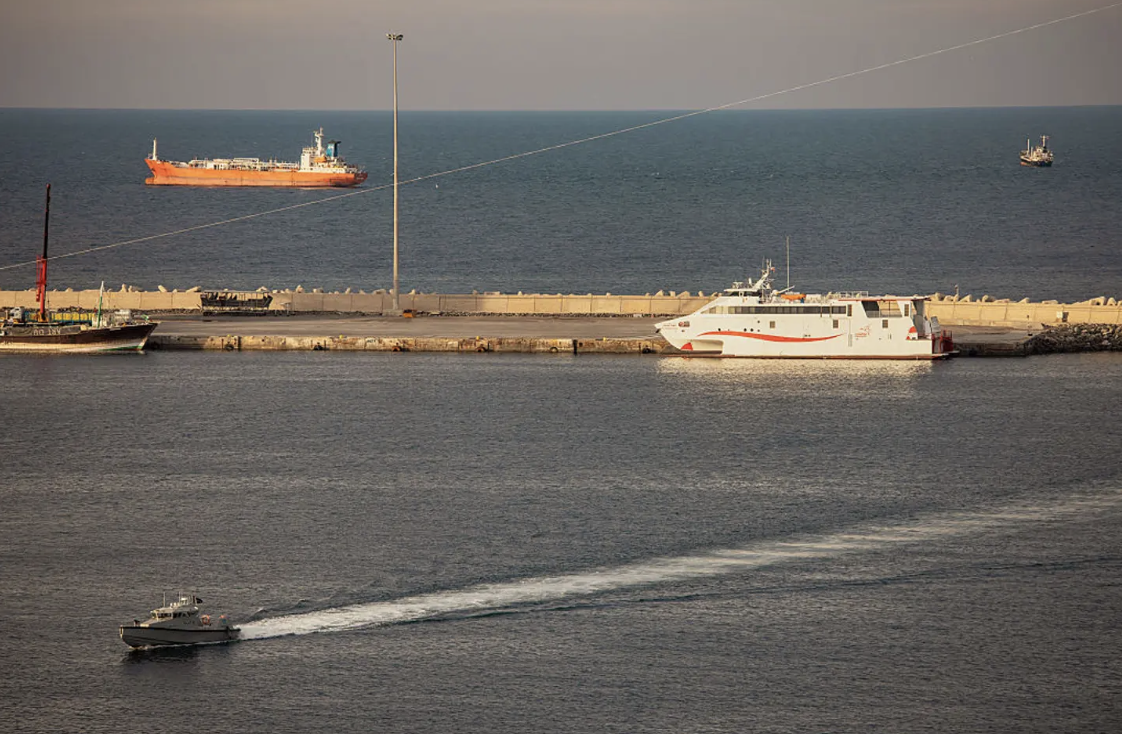
Warta Kema – Since Saturday (28/02), the situation in the Strait of Hormuz has remained uncertain. The Strait of Hormuz is a vital route for the global economy, through which 20–30% of global economic activity, particularly oil and gas, takes place. Iran, which controls the Strait, has decided to block the Strait of Hormuz for weeks due to the military escalation of the US-Iran war.
The blockade of Hormuz has caused oil prices to continue rising, reaching up to US$92.69 per barrel for Brent and US$90.90 per barrel for WTI, leaving nearly 800 ships stranded in the Persian Gulf for nearly two months. This affected the energy supply of several countries in the Asia-Pacific that rely heavily on imported energy from the Gulf.
Among all the affected countries, South Korea took the most immediate response within a week after the escalation, when President Lee Jae-Myung convened a cabinet meeting in Seoul to assess the impact of the crisis on Tuesday (24/03). On the same day, the government launched a nationwide energy-saving campaign, urging citizens to reduce consumption of oil and gas supplies by adopting 12 energy-saving practices, such as shortening showers, washing machines, and vacuum usage over the weekend. The government also suggested that oil-consuming businesses cut their use, while they were trying to discuss renewable energy, especially nuclear energy, for South Korea’s future. These swift moves came as nearly 70% of the country’s crude oil imports, with around 1.7 million barrels, were reportedly delayed because they needed to pass through the Strait of Hormuz, as reported by Reuters.
While the strategic campaign applied, South Korean Energy Minister, Kim Sung Hwan, said in a CNBC exclusive interview on Wednesday (15/04), “South Korea currently holds a strategic oil reserve of approximately 119 million barrels. Since the situation has not yet had a direct or significant impact on supply and demand, there are currently no plans to release these reserves immediately, but we are ready to act if there is an emergency”, stressing that oil supply remains stable for South Korea.
Following South Korea’s response, Vietnam responded by establishing an energy security task force under Prime Minister Pham Minh Chinh to maintain a stable supply. On Thursday (19/03), the government issued a directive to diversify energy sources, expand the use of alternative fuels such as E10 biofuel, and promote the usage of electric vehicles and bioethanol. These steps were taken as fuel prices increased.
Looking ahead, Reuters reported on Tuesday (21/04) that Vietnam’s parliament office approved a proposal to extend the preferential tax policy. It includes a reduction of the special consumption tax on electric vehicles until 2030. So, regarding fuel supply, Vietnam’s domestic fuel supply has secured sufficient crude feedstock to maintain production through the end of April 2026.
As for the Philippines, they declared a national energy emergency (24/03). According to The Guardian, Secretary of Energy, Sharon Garin, said the country had only about 45 days of fuel supply. She also explained that the government is attempting to secure around 1 million barrels of oil from other sources amid uncertainty. Later on Thursday (09/04), as reported by the Daily Tribune, Sharon Garin confirmed that supply commitments had been secured through import shipments from Japan, Malaysia, India, and Oman, bringing the total supply to 165.7 million liters.
The Guardian also reported that Thailand has taken steps to manage the energy crisis by increasing the biofuel blend ratio from 5% to 7% and suspending most oil exports to secure the domestic supply. The country is experiencing visible impacts on the ground with panic buying at petrol stations, “out of stock” signs, and fuel rationing being introduced. Amid these actions, as of Monday (20/04), the Oil Fuel Fund recorded a deficit of over 62 billion baht due to continued interventions to cushion domestic fuel prices, as reported by the Nation. The report further added that the country holds oil reserves sufficient for approximately 110 days of consumption.
While the other Southeast Asian states swiftly responded to the energy crisis, Indonesia took a different stance. Purbaya Yudhi Sadewa, as the Finance Minister, stressed that the country’s domestic energy supply remains stable despite rising global oil prices up to US$70 per barrel. Speaking to reporters from the Jakarta Globe, he emphasised that an energy crisis should be defined as supply disruptions rather than as rising prices. He also noted that even though global oil prices are nearing US$100 per barrel amid the Middle East conflict, Indonesia’s 2026 state budget is still capable of handling the pressure. As a result, there is no urgent need to adjust fiscal assumptions or fuel subsidies.
Over time, Iran has implemented selective closures, meaning that some countries are indeed permitted to pass through the Strait. Countries that successfully had a deal with Iran, confirmed by the BBC, include Thailand, Malaysia, the Philippines, and China.
However, oil prices continue to face upward pressure as ceasefire negotiations between the United States and Iran remain unresolved. Recent developments from Al-Jazeera show that after Iran declared the Strait opened on Friday (17/4), Iran reinstated restrictions, citing the US naval blockade and repeated violations of the ceasefire.
While the situation in the Gulf remains volatile, what does the future hold for global oil supplies?
Reporter: Abir Azra Larasati
Editor: Khayla Dinda Pradwina, Elga Thalita Perangin Angin, Fernaldhy Rossi Armanda