
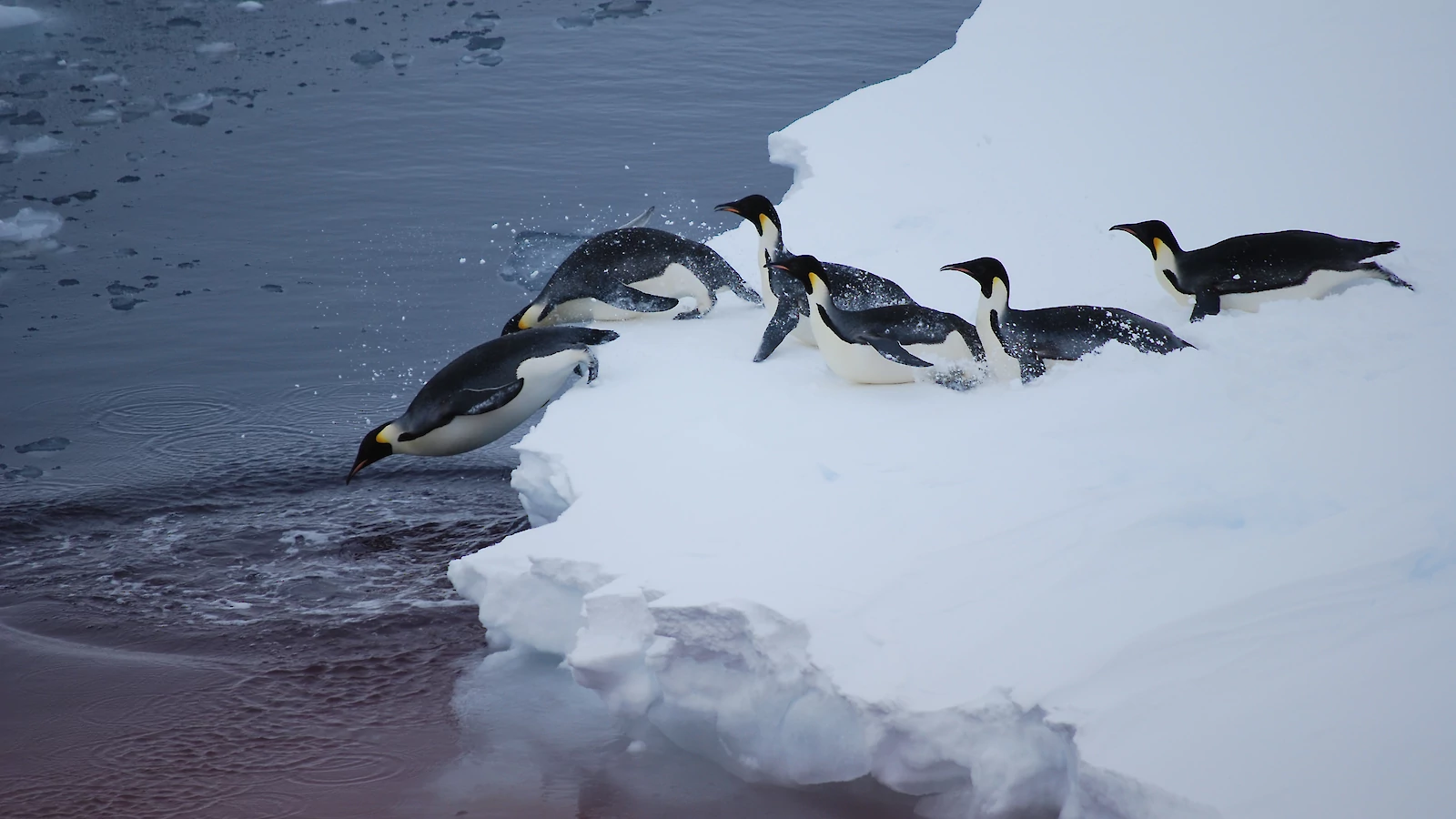
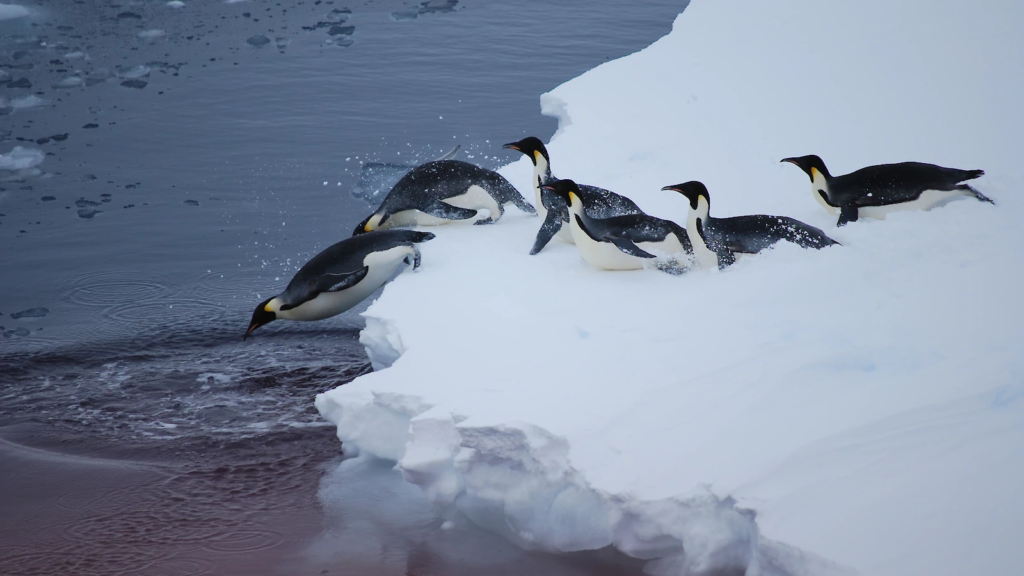
(Photo: Andrew Burgess)
Warta Kema – According to the International Union for Conservation of Nature (IUCN) Red List of Threatened Species, emperor penguins and Antarctic fur seals are now classed as endangered due to the declining sea ice caused by climate change. The total number of endangered Antarctic species now rises from 11 to 13 (09/04).
The Melting of Sea Ice and Its Effect on Antarctic Wildlife
What is Antarctic sea ice?
Every winter in Antarctica, the top layer of the Southern Ocean freezes solid, forming what is known as Antarctic sea ice. By the time summer comes, much of the sea ice shrinks, but ice that is thick enough will remain frozen throughout the season. Sea ice has many important roles in the Antarctic ecosystem, especially for wildlife. It provides krill as a food source for most Antarctic animals, as well as breeding grounds and shelter for a wide range of seal and penguin species.
However, climate change has caused significant warming in Antarctica, leading to sea ice melting and declining over the years. This greatly disrupts Antarctic wildlife, making Antarctic animals struggle to survive and face the growing risk of extinction.
According to the European Organisation for the Exploitation of Meteorological Satellites (EUMETSAT), the increase in sea ice stopped in 2014 and began reversing in 2017. Since then, the overall trend has continued to decline. Sea ice levels are measured by their largest extent during the winter (annual maximum) and their smallest extent in the summer (annual minimum). Notably, the lowest sea ice level on record occurred in 2023. Most recently in 2025, both the annual minimum and maximum levels remain significantly low, being the third lowest on record.
Fewer Shelter and Breeding Grounds for Emperor Penguins
It was mentioned in the IUCN press release that the population of emperor penguins has dropped by 10% from the span of 2009 to 2018, losing over 20,000 adult penguins. Now, IUCN has moved its status from ‘near threatened’ to ‘endangered’ due to projections that its population will drop 50% by the 2080s. The main cause of the decline in penguins is due to the melting of sea ice, as they rely on it as a habitat for their chicks. Emperor penguins breed during the Antarctic winter and need stable sea ice to lay their eggs and raise their chicks. However, climate change has caused Southern Ocean temperatures to rise and further caused its sea ice to break in early spring. As a result, many chicks did not survive after falling into the water because most have yet to develop feathers or learn to swim in the early season. The worst incident happened in 2022, when a catastrophic breeding failure occurred across four Emperor penguin colonies, causing the death of thousands of chicks.
Declining Food Source for Antarctic Fur Seals
Antarctic fur seals were once classified as ‘least concerned’ by IUCN, but they/it? was soon reported that in 2025, their population had dropped to around 1.2 million. The estimated drop of mature seals was from 2.1 million in 1999 to only 944,000 as of last year. The main cause of this population drop is the reduced availability of Antarctic krill as their primary food source. So what happened to these Antarctic krill?
Antarctic krill depend on cold water and sea ice for survival. Sea ice provides algae as a primary food source for krill, while also serving as shelter for its larvae during winter. However, climate change has warmed the Southern Ocean and reduced its sea ice habitat. This phenomenon reduced krill production and forced many of them to move deeper into cold waters. Because Antarctic krill are at the center of the Antarctic food web, this makes Antarctic fur seals and other species struggle to find food. Therefore, to survive, they would have to compete with each other for the remaining krill.
A Wake-up Call on Climate Change
Over the years, human activities such as burning fossil fuels and deforestation have contributed to long-term changes in the Earth’s climate. Those activities eventually worsened the melting of sea ice every passing year. Based on the provided information, we can conclude that the acceleration of the extinction crisis among Antarctic species is driven by the continuous problem of human-induced climate change. The situation will not change if it does not start with individual action.
As Dr Grethel Aguilar, IUCN Director General, commented, “These important findings should spur us into action across all sectors and levels of society to decisively address climate change. The declines of the emperor penguin and Antarctic fur seal on the IUCN Red List are a wake-up call on the realities of climate change. Antarctica’s role as our planet’s “frozen guardian” is irreplaceable – offering untold benefits to humans, stabilising the climate and providing refuge to unique wildlife.”
Reporter: Dzakira Azhlianisa
Editor: Khayla Dinda Pradwina, Elga Thalita Perangin Angin, Fernaldhy Rossi Armanda