

#FilmIsNotDead is one of the most popular hashtags on Instagram. And it’s all about film. But what is film, really? Technically speaking, the term “film” can refer to any type of very thin layer or sheet, like window film or paint protection film on your car. In photography, film refers to the light sensitive sheets used to capture images.
Where Photography Starts
First photographs were not created using the films we know today. Rather, it used other light sensitive material. The first fixed photograph was shot in 1827 by Nicéphore Niépce and it was named View from the Window at Le Gras. He used a metal plate, thinly coated in light sensitive asphalt. When exposed to light, the bright spots of asphalt hardened, while the dark spots were able to be washed off, leaving the image fixed on the plate. Soon after, inventors started to experiment with different materials in an effort to capture clearer image. Another French inventor, Louis Daguerre, experimented with silvers and popularized Daguerreotype. He used a sheet of silver-plated copper, polished it to a mirror finish, exposed it to fumes, then exposed it to the scene.

Different inventors used different materials throughout the 19th century. In 1885, entrepreneur George Eastman created paper film. Three years later, he began selling Kodak Camera, a leather box camera filled with 100-exposure (100 shots) film roll. And in 1889, he created plastic film roll from cellulose. Eastman popularized photography using film and made it very accessible to the masses throughout the rest of 1800s and the 1900s. Film photography is commonly used due to its ease of use and low price tag for the general public, even though plate cameras were able to capture higher quality images.

The Shift
During the 1950s, the world started shifting from mechanical to digital technologies. This includes photography. In 1969, William Boyle and George Smith invented the first digital sensor. And in 1986, Nikon demonstrated the first digital single-lens reflex (DSLR) camera using the new imaging technology and released it to the public two years later. With rapid advancements of digital technologies of the 1990s, film cameras were slowly phased out by digital cameras. The advantage of digital cameras over their film counterpart is that it is cheaper, because the users don’t have to buy film and develop it anymore. Surely enough, digital cameras took over photography after the turn of the century, leaving film cameras as an archaic piece of technology.
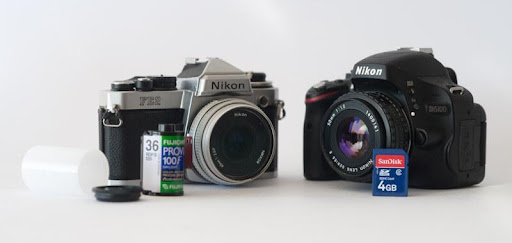
The world is now digital. It seems that the world is going for a fully digitalized future. However, in the last few years, the ancient way of film photography seems to be re-emerging. In a fast-moving world where one is trying to do things in a time-efficient manner, film photography does not make sense. It is slow, costly, and limiting. So, why do some photographers chant #FilmIsNotDead and praise the medium?
Reason for Film
The answer is not as cut and dried. And it all comes down to preference and how people appreciate the method. The most common reason film photographers shoot film is that because it has the “look” that no digital cameras are able to replicate. This “film look” is difficult to describe, since pleasing looks are very subjective and differ on every individual. One component that may explain the difference is film grain. Digital image has noise and it sometimes likened to film grain, but film photographers argued that film grain presents a more aesthetically pleasing look. And another reason is that film handles light and color as well as highlights better than digital sensors. But this is all in the realm of subjectivity.
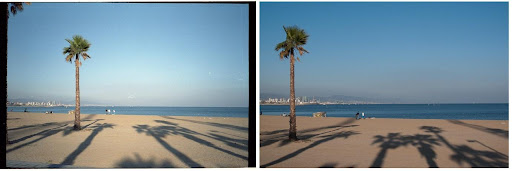
Film photographers enjoy the slower process of capturing a moment. By being slower, they put more effort on composing shots and really consider every single part of the frame. With a limited number of shots per roll, they tend to be more careful and more mindful about the scene they’re about to capture so as to not waste it on unwanted “bad” shots. Film photographers swear by this process of manually focusing, exposing, then developing and scanning it would yield a better image. It helps them appreciate their creations more.
Right now, film photography is on its return. Many young people are now trying out the medium themselves. Although most of them grew up knowing digital cameras, the slower process of film really resonates with them, giving them a chance to feel somewhat of a nostalgia.
An Eventual Death
However, film photography has one weakness that might assuredly kill it for good in the future: the environmental impacts. Films are not biodegradable. Films are made up of plastic, coated in silver crystal and it is not recyclable. The process of developing film photographs also requires toxic chemicals that can be dangerous to animals and humans. With the world moving to a more environmentally conscious future, this trend might not be here to stay.
It is very sad to see the beautiful process of film photography slowly dying in front of our eyes. But until there is a more sustainable and environmentally friendly way to shoot film, this medium will face a certain, eventual death.
Penulis: Audi Faritz
Reporter: Audi Faritz
Editor: Fareez Eldacca